From fork() to Fleet: Designing an Agent Sandbox Cloud Pt 1
Conference Context
- Date/time: 2026-06-30 · 1:30pm-1:50pm
- Track/room: Sandbox & Platform Engineering · Track 1
- Speaker(s): Abhishek Bhardwaj
- Session type/status: session · confirmed
- Track: Sandbox & Platform Engineering
- Room: Track 1
- Session type: session
- Status: confirmed
Session Description
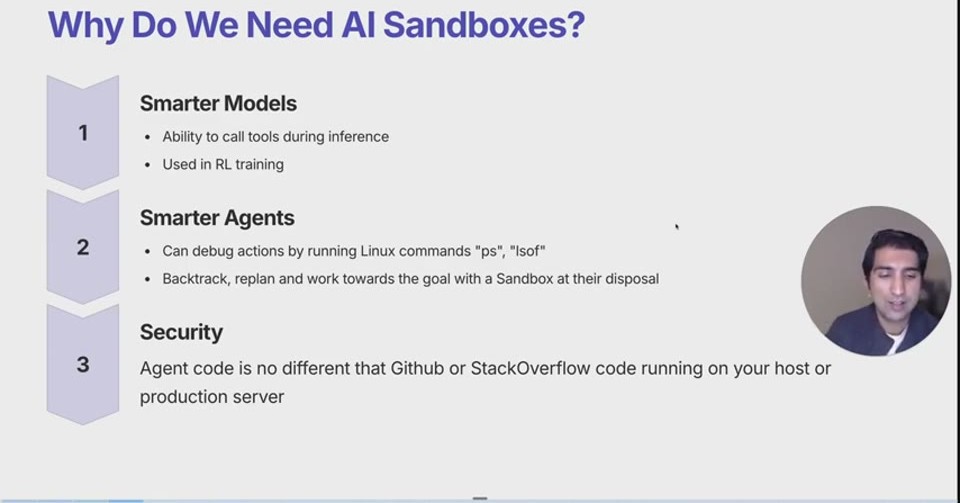
Sandboxes unleash agents by giving them secure, fully functional computers where they can tackle diverse tasks with minimal setup. This talk explores the architectural challenges of building an agent sandbox cloud. We compare runtime isolation technologies and their trade-offs, examine persistence and storage as the next major unlock for agent capabilities, and discuss the key decisions involved in orchestrating and scaling sandboxes.
Media Evidence
Arrakis: How To Build An AI Sandbox From Scratch - Abhishek Bhardwaj, OpenAI (speaker-match related prior/adjacent AI Engineer video; captions: English auto-captions).
- Source video:
youtube-wsFd22SL1s8 - Slide deck: Dense Slides: Arrakis: How To Build An AI Sandbox From Scratch - Abhishek Bhardwaj, OpenAI — 42 visible slide image(s); 42 HTML recreation(s).
- Additional slide evidence: Slides: Arrakis: How To Build An AI Sandbox From Scratch - Abhishek Bhardwaj, OpenAI, Reconstructed Slides: Arrakis: How To Build An AI Sandbox From Scratch - Abhishek Bhardwaj, OpenAI
- Slide-derived themes for
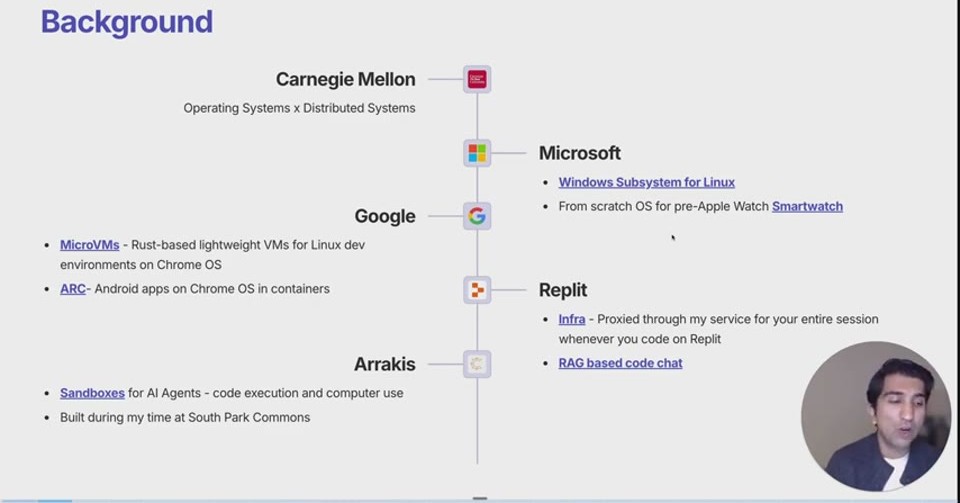
youtube-wsFd22SL1s8: systems, chrome, code, sandboxes, operating, distributed, windows, subsystem.
Evidence Graph
This evidence graph is generated from currently linked source material: official schedule text, related video pages, cached transcripts, visible slide text, dense/reconstructed slide pages, and AI slide-classification audits.
Media Signals
youtube-wsFd22SL1s8— 10 slide-derived text signals- Slide-derived themes for
youtube-wsFd22SL1s8: systems, chrome, code, sandboxes, operating, distributed, windows, subsystem. - Evidence links for
youtube-wsFd22SL1s8: youtube wsFd22SL1s8, youtube wsFd22SL1s8 slides, youtube wsFd22SL1s8 dense slides, youtube wsFd22SL1s8 reconstructed slides
Agent Reading Notes
Use these signals to refine the synopsis, topic links, people/company context, and method notes. If a source is a related external video rather than an exact official recording, keep it framed as supporting evidence.
Summary
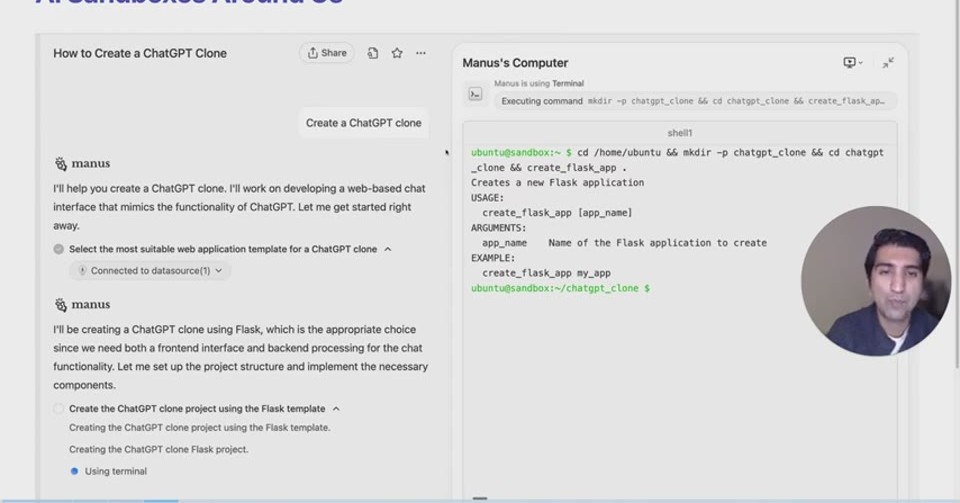
Abhishek Bhardwaj's session is about the infrastructure that lets coding and computer-use agents operate inside real, stateful computers without handing them the host machine. The connected Arrakis slide material grounds the talk in a bottom-up sandbox design: starting from process creation with fork()/clone, then layering Linux namespaces, mounts, containers, syscall boundaries, userspace/kernel separation, snapshots, and attack-surface reduction into an environment an agent can safely use. That makes the session less a generic cloud-scaling talk than a concrete tour of how low-level Linux isolation becomes an agent platform primitive.
The platform question is how to turn those primitives into a fleet of useful sandboxes: agents need filesystems, Python processes, servers, networked tools, persistence, and replayable state, while operators need hard boundaries around untrusted code and predictable orchestration at scale. Bhardwaj's OpenAI agent-infrastructure background and the linked Arrakis deck point to the key design tensions: containers versus stronger runtime isolation, snapshots as both product capability and operational control, storage as the next unlock for long-running agent work, and orchestration choices that decide whether sandboxes feel like disposable processes or durable computers for agents.
Transcript Status
Related video transcript availability: English auto-captions. Treat this as supporting context, not a recording of this exact scheduled session unless later confirmed. Not fetched yet.
People
Supporting Slides
- youtube wsFd22SL1s8 slides — extracted from the related public AI Engineer video.
Slide Evidence
- Slide-only cropped deck: youtube wsFd22SL1s8 dense slides (42 viable slide images).
- Related slide/OCR pages:
- youtube wsFd22SL1s8 dense slides
- youtube wsFd22SL1s8 reconstructed slides
- youtube wsFd22SL1s8 slides
- Slide-derived terms:
namespace,arrakis,process,containers,kernel,container,linux,code,chatgpt,clone,mount,attack,snapshot,server,python,userspace,version,syscall
Attendance Visibility
No high-confidence attendance icon signal is shown for this talk. The sampled video evidence was either low confidence, source-proxy-only, or did not expose a clear audience view.
Official YouTube Recording
- youtube OqM67QG_Ikk — official AI Engineer YouTube channel recording published 2026-07-08.
- Evidence status: transcript/slide enrichment pending.
- Boundary: use this recording as media evidence; keep date/time/room facts tied to the official schedule.
Synthesis
Synthesized Breakdown
From fork() to Fleet: Designing an Agent Sandbox Cloud Pt 1 ## Conference Context - Date/time: 2026-06-30 · 1:30pm-1:50pm - Track/room: Sandbox & Platform Engineering · Track 1 - Speaker(s): Abhishek Bhardwaj - Session type/status: session · confirmed - Track: Sandbox & Platform Engineering - Room: Track 1 - Session type: session - Status: confirmed ## Session Description Sandboxes unleash agents by giving them secure, fully functional computers where they can tackle diverse tasks with minimal setup. This talk explores the architectural challenges of building an agent sandbox cloud. We compare runtime isolation technologies and their trade-offs, examine persistence and storage as the next major unlock for agent capabilities, and discuss the key decisions involved in orchestrating and scaling sandboxes. ## Media Evidence Arrakis: How To Build An AI Sandbox From Scratch - Abhishek Bhardwaj, OpenAI (speaker-match related prior/adjacent AI Engineer video; captions: English auto-captions).
Speaker And Company Context
- No speaker profile is attached in the official schedule data.
Topics Covered
Derived Links And Source Material
- youtube OqM67QG_Ikk — related YouTube source page.
- youtube wsFd22SL1s8 — related YouTube source page.
- youtube wsFd22SL1s8 slides — slide evidence.
- youtube wsFd22SL1s8 reconstructed slides — slide evidence.
- youtube wsFd22SL1s8 dense slides — slide evidence.
Novel Concepts / Clever Methods
- No highlighted novel concept has been detected yet.
Evidence Boundary
This synthesis is based on the official schedule and linked source pages. It should be revisited when exact session recordings or transcript-backed secondary sources are available.